


Adam Smith on his TOMORA video trilogy | 'Watching Tom and Aurora at work really changed my perception of the music.'
David Knight - 18th Mar 2026
The director has lots of experience with both The Chemical Brothers' Tom Rowlands and Aurora, but he tells us coming up with the videos for their new project was a different story altogether.
Adam Smith's relationship with Tom Rowlands of The Chemical Brothers goes back more than three decades. With Norwegian singer Aurora, it's a few years. In both cases, he has played an important role in their respective artistic progress, through the extraordinary visuals that have accompanied their live shows.
With his partner Marcus Lyall, Smith has built a legendary body of work for The Chemical Brothers' pulsating live performances over a considerable period. For more than 20 years each new tour by Rowlands and his partner Ed Simons has seen new visuals by Smith & Lyall introduced to the show, featuring their distinctive figurative style, largely influenced by ancient traditions of theatre and mime. And Smith, who started working with TCB in the early Nineties, directed the concert film DON"T THINK (2012) which captured a legendary performance by The Chemical Brothers in Japan and showcased their visuals in the film.
In tandem Smith has had a successful solo career in screen drama as a TV and film director - his music videos for the likes of The Streets and Madness in the Noughties led to work on Skins, Little Dorrit, Dr Who and more - and he also directed the music video for Galvanize, one of the Chems' best-loved tracks. Then Eve Of Destruction became the first visual by Smith and Lyall from the live show to be released as an official video - which featured Aurora, the singer on the track. That in turn led to him working with Aurora on visuals for her live shows in 2024.
Above: Adam Smith and Aurora on the Somewhere Else shoot in Brighton, February 2026. Photo by Clare Park
Now the rather unexpected collaboration by Rowlands and Aurora on a separate project to The Chemical Brothers - called TOMORA - has resulted in Smith solo directing his first music videos since the late Noughties. The videos for the tracks Ring The Alarm, Come Closer (the title track from the album that's released on April 17th) and Somewhere Else are part of a wider visual campaign that Smith is orchestrating. But they are each distinctive in their own right - with Aurora's hypnotic presence providing the common thread.
We talked to Adam Smith about how the project came together and discovered that he was brought in at an early stage - in fact, while the pair were still recording the music - which had a major impact on the subsequent creative process.
PROMONEWS: How did the project start? Did you know while they were making the album that you would be doing the videos (and other visuals) for the project?
ADAM SMITH: Tom and Aurora sent me songs as the album was being made. They were (and are) brilliant songs and the album is amazing. They asked me to be involved in making visuals: the videos, pictures and the live show.
We came up with this character called Ora discovering a world, which we’ve loosely adhered to.
I went out to Bergen in Norway when they were recording which was amazing. We stayed with Aurora’s parents who live by the beautiful glacier of light. I even had a swim there. It was incredible to witness Tom and Aurora creating and making music. It really changed my perception of the music, made me understand it more, understand playfulness and mischief - themes that I had missed listening on my own. They were having so much fun, but also so focussed.
We didn’t know what the scale of it all was going to be, so some of the initial ideas had to be scaled down when the reality of budgets hit. Initially I presented hundreds of images to them both and over a series of excited meetings we narrowed it down.
Aurora and Tom kind of made sense of this bombardment of visual imagery I showed them. We came up with a concept of this character called Ora discovering a world, which we’ve loosely adhered to.
Did it feel like an extension (or progression) of the work you’ve done previously with The Chemical Brothers and Aurora, or something distinctly different?
AS: I guess a mixture of both - although we really tried to make it feel different.
Aurora was very keen on exploring visual aspects that weren’t in the Aurora visual world. So bright pinks, seeing her in an urban environment [for the Somewhere Else video] and experimenting with wigs, sunglasses and different costumes.
Above: On set of the Ring The Alarm shoot, summer 2025
How did you come up with the idea for Ring The Alarm?
AS: Aurora had this idea of Ora disrupting the everyday, alerting people to something that no one was taking any notice of. It was a call to action but also had this mischief motif as well. So we set it in a factory where she is working where she attempts and eventually succeeds in changing her co-workers, liberating them.
All this is told with masks and dance (developed with Amit from Gecko Theatre and the dancers Jesse and Chris). So not sure if anyone gets this story, but like the Chemical Brothers' visuals we always try and have a narrative albeit a non-explicit one.
Did the idea evolve during the shooting and editing?
AS: The final look was originally imagined as hand-painted Georges Méliès look that Tom, Aurora and I loved. But this really didn’t feel right once we had the rushes. Tom called it and Aurora and I agreed that we needed to rethink. [That was] scary as there were only three days left before we had to deliver!
So I got Marcus [Lyall] and the post place to do me various different distorted versions in hot pink using trail effects, inversions and various other things. We then re-edited these, overlaying and combining them. It was a process that came out of necessity but was actually really fun. Tom said it’s actually similar to how he works. Distorting things and then picking out the best of the distortions and combining them.
Aurora is mesmerising. So it’s about getting the right environment for that to be able to seen.
It’s always a bit frightening when your initial idea hasn’t worked but after years of working together Tom and I (and Aurora) are able to have these honest conversations. And they were so supportive of me finding a new visual direction and luckily they loved the result!
What were the challenges in making something so intimate and direct as the Come Closer video?
AS: They were the usual challenges with a single long take idea. Getting the sync and performance right for a long bit of screen time is always scary. I think we did 20 or more takes.
It's also a challenge to trust your instinct that what worked was something very simple. There’s no edits or effects or spectacle to hide behind. It’s all about the performance and a simple lighting effect.
Above: Shooting the Come Closer video, late 2025
What direction did you give Aurora to draw out that performance?
AS: Well, Aurora is mesmerising. So it’s about getting the right environment for that to be able to seen.
We met and didn’t rehearse as such but we discussed the emotional journey. On the day it was about being there for her if she needed me, supporting her and trying to make the set a place where it was totally safe to be vulnerable.
Why did you move into the ‘real world’ situation for the Somewhere Else video? Was that something that was planned at the start of the project?
AS: I originally had wanted to do a more abstracted version of the “real world”. I pictured a video that was all double exposed. I had always liked the trip sequence in the churchyard in Easy Rider and have a book I love of double exposures. I was thinking abstracted natural textures laid on top of Aurora in the natural world. Tom & Aurora didn’t go for this They both encouraged me to think more of Ora (the character we call Aurora in the Tomora world) in an urban setting and to write something more narrative and less abstract.
Various scripts emerged. One of them adapted from the start of a film I am writing that I had told Tom about but this proved too expensive. Another was more explicitly narrative and explored a past relationship but that got rejected and we ended up with this idea of Ora discovering a new world, a journey from disconnection to connection (through music and dancing).
Above: Under the Palace Pier, Brighton on the Somewhere Else shoot, with Adam (second right) and crew surrounding Aurora. Photo by Clare Park
The Palace Pier in Brighton is a wonderful location. Can you recall how you came up with the idea of Aurora (or ORA) experiencing the world through the amusements on the Pier?
AS: I wanted something that had a lot of energy and colour for the drops and things that had brightness, lights and movement Also I had had an image of someone on a ride in an early presentation I had put together.
Originally we were going to film at Margate’s Fenland but they were having major repairs. I’m glad we ended up on the Pier. Brings back a lot of fond memories that Pier.
Were you able to plan the sequence of those great-looking Pier shots, or was this more of a run-and-gun situation?
AS: Dan Lowe (DoP) and I did two recces down there and shot with a stand-in so we had a clear idea of what we wanted. Of course on the day this changes and Aurora always brings brilliant new ideas.
We didn’t quite pull it off, but the idea was that Ora would never be in the middle of the frame until she had experienced human connection. We were saving that for the last scene on the dance floor. So for the majority of the video she is on the sides of frame.
Above: Aurora on Brighton Pier's merry-go-round with DoP Dan Lowe (left) on Somewhere Else shoot. Photo by Genevieve Stevenson
What were the main challenges on the shoot? And what was the key to drawing out Aurora’s performance?
AS: Filming outdoors in February in England is always a bit of a gamble. Originally the first scene was going to be in Rottingdean [near Brighton] but the forecast was terrible so we moved it to under the Pier to get some rain cover. As it turned out the weather was changeable but mostly okay and I think I now prefer her waking up under the Pier.
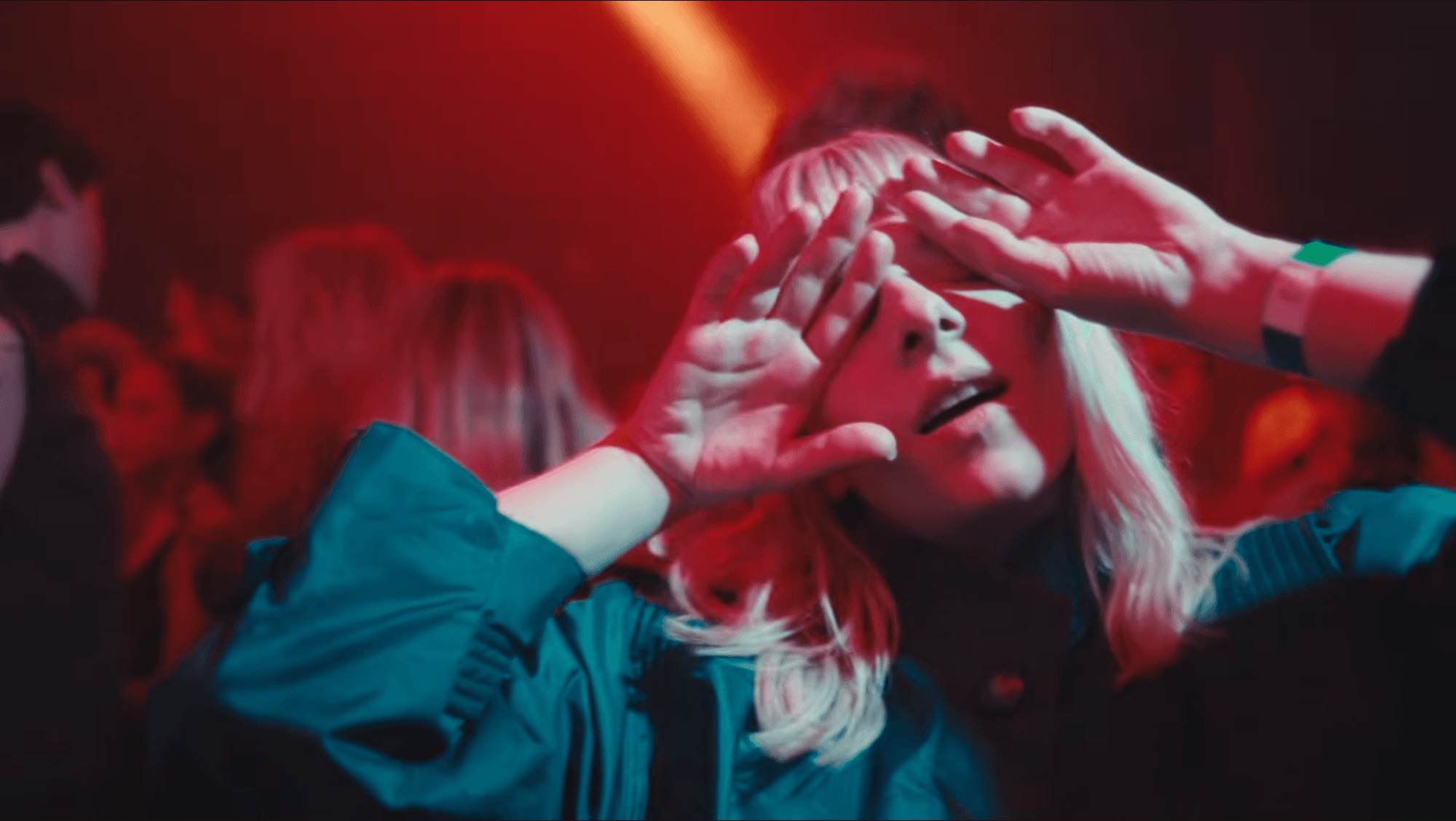
Filming in the club and trying to be unobtrusive was a challenge. At one point Aurora said she didn’t feel comfortable disturbing people's night out which was totally right but also a bit terrifying at the time as we didn’t have the shots we needed yet.
An unannounced set from Tom with a live PA from Aurora was a pretty special moment.
In the end we sent her back into the dancefloor and filmed from the lighting desk on a long lens. I wanted it to be wide lens and close to her to get a really intimate feel but actually the long lens stuff means she is really immersed in people which worked for the them of connection. Long lens isn’t the way you might traditionally try and show connection with others but it sort of worked (or maybe I am post-rationalising to try and make myself feel better).
Aurora and I have worked together quite a lot now so there is a shorthand between us. I am very conscious of it being the right atmosphere when we are filming for her to feel confident, free and able to be vulnerable. I did have a load prompts of active things to play (to get the emotions we wanted to get) but I dont think I particularly used them in the end.
She cried in the cinema scene watching the actress Kathryn Hunter (Poor Things). This was some footage I had of Kathryn (crying herself) that I shot for a play she was in but it didn’t get used in the play.
Above: Adam Smith with Aurora and friend (left) and Dan Lowe (right), Somewhere Else shoot on Brighton Pier. Photo by Clare Park
Where did you shoot the scenes in the club - and was that a real DJ set from Tom?
AS: It was shot at a brilliant London club night called Lost. We didn’t have budget to recreate a club scene so I want somewhere where I knew there were interesting people and an interesting atmosphere.
One of the many great things about Lost is they confiscate your phone at the door so no one inside has mobile phones. Lost is in the old Odeon on Shaftesbury Avenue so there are still two cinemas in there which is where we shot the cinema scene.
Yes Tom played which was great. It was why they let us film there! And Aurora sang Somewhere Else as part of the set. An unannounced set from Tom with a live PA from Aurora was a pretty special moment. Later on in the night they played DON’T THINK in one of the cinemas.
Have you also produced the videos yourself?
Ring The Alarm and Somewhere Else were produced by S T A R T ! , which is the new creative collective formed by myself and Tim Bell of Complicite Theatre, with the aim of bringing together filmmakers, artists and musicians around bold, visually driven ideas.
It's been great working with Tim who, with his background in theatre has a great respect for process which is teaching me a lot. And Come Closer was a co-production with Treatment & S T A R T !
Will there be more visuals from the TOMORA campaign? If so, what can we expect?
AS: The live show, which is exciting. I have never done live cameras before - so that’s terrifying!
• TOMORA's album 'Come Closer' is out on April 17th.
Featured on this page
Tags
Popular content
Feedback
Problem with this page? Let us know